


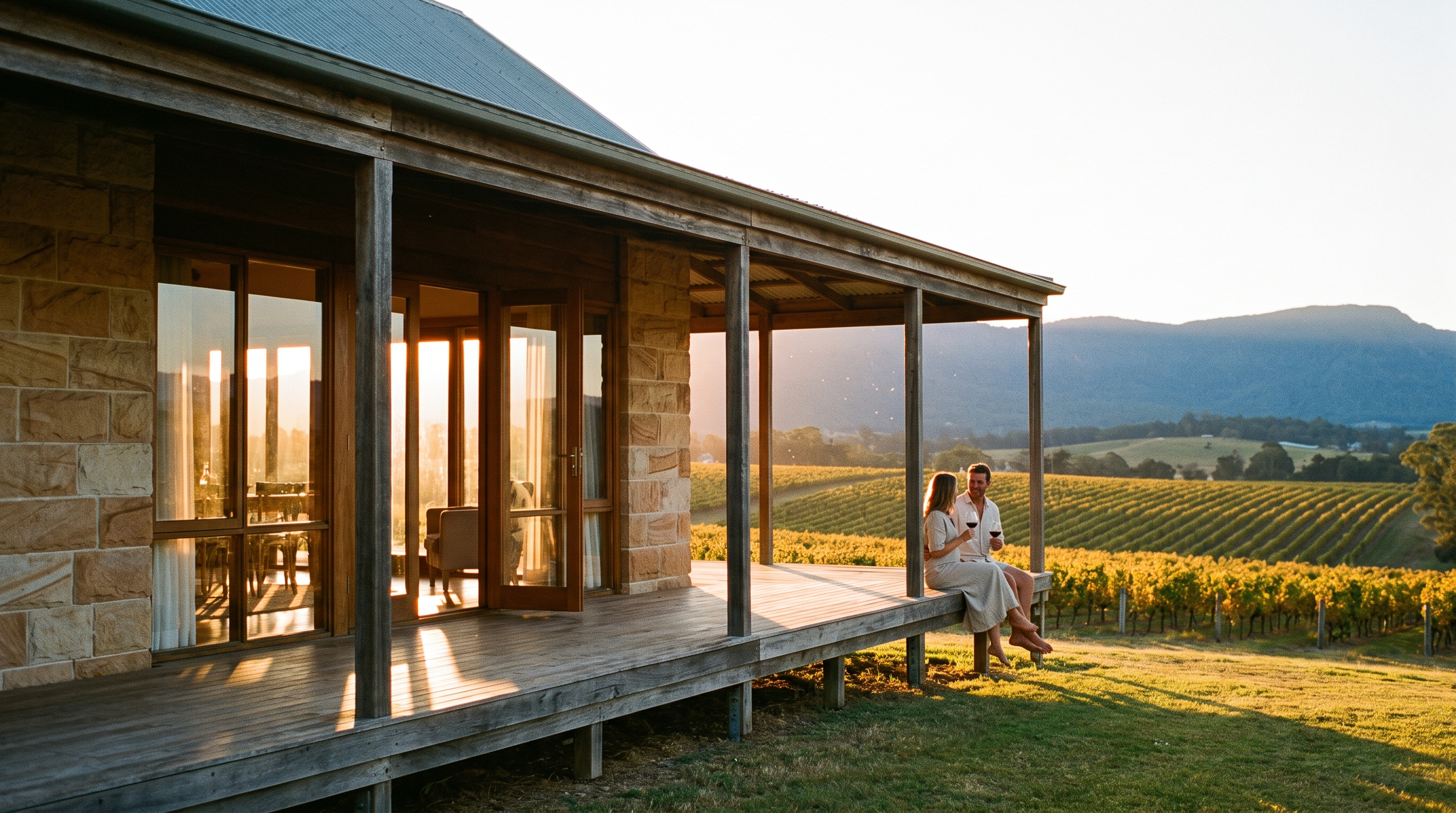
Hunter Valley Stays manages one of the finest boutique accommodation collections in Australia's most-loved wine region. Together, we're going to make sure the people searching for exactly that experience actually find you.
You've already built something rare. Hunter Valley Stays is the region's No.1 privately owned boutique property management agency, named 2024 Accommodation Operator of the Year, with a hand-picked collection of around thirty properties from romantic cottages to grand estates, a founding family whose roots in Wine Country run back more than two decades, and a philosophy, quality over quantity, that the bigger operators simply can't claim with a straight face. The product is genuinely premium, and the guests who find you love you for it.
An area of opportunity lies around that word, find. The modern trip almost always begins in one of three places: a Google search, a travel platform, or, more and more, a question typed into an AI assistant. Right now we're lightly represented in the first, not yet on the shelf in the second, and largely unseen in the third. That's not a criticism of anything you've done, it's simply the ground we get to claim next, and most of it is wide open.
We've written this in two halves. The first half is the groundwork: a proper look at the market we're playing in, the seasonal rhythms that shape demand, and a look at every other player in the space, each with its own scorecard and SWOT, ending in a clear picture of where we should catch up, where we already lead, and the open ground nobody in the Valley has claimed yet. the second half turns that into the plan: what we'll build, how each channel works, the roadmap and timeline, deliverables, service levels, KPIs and budget.
A quick word on how we work. Nothing in here is guesswork. Market figures come from Destination NSW and published tourism research. The competitor read comes from us sitting down and going through each of their live websites, positioning and rates in July 2026. Where a number is a model rather than a measurement, we've said so. We believe a proposal created with the intent of asking for your trust should show its working, and we've made every effort to ensure this one does.
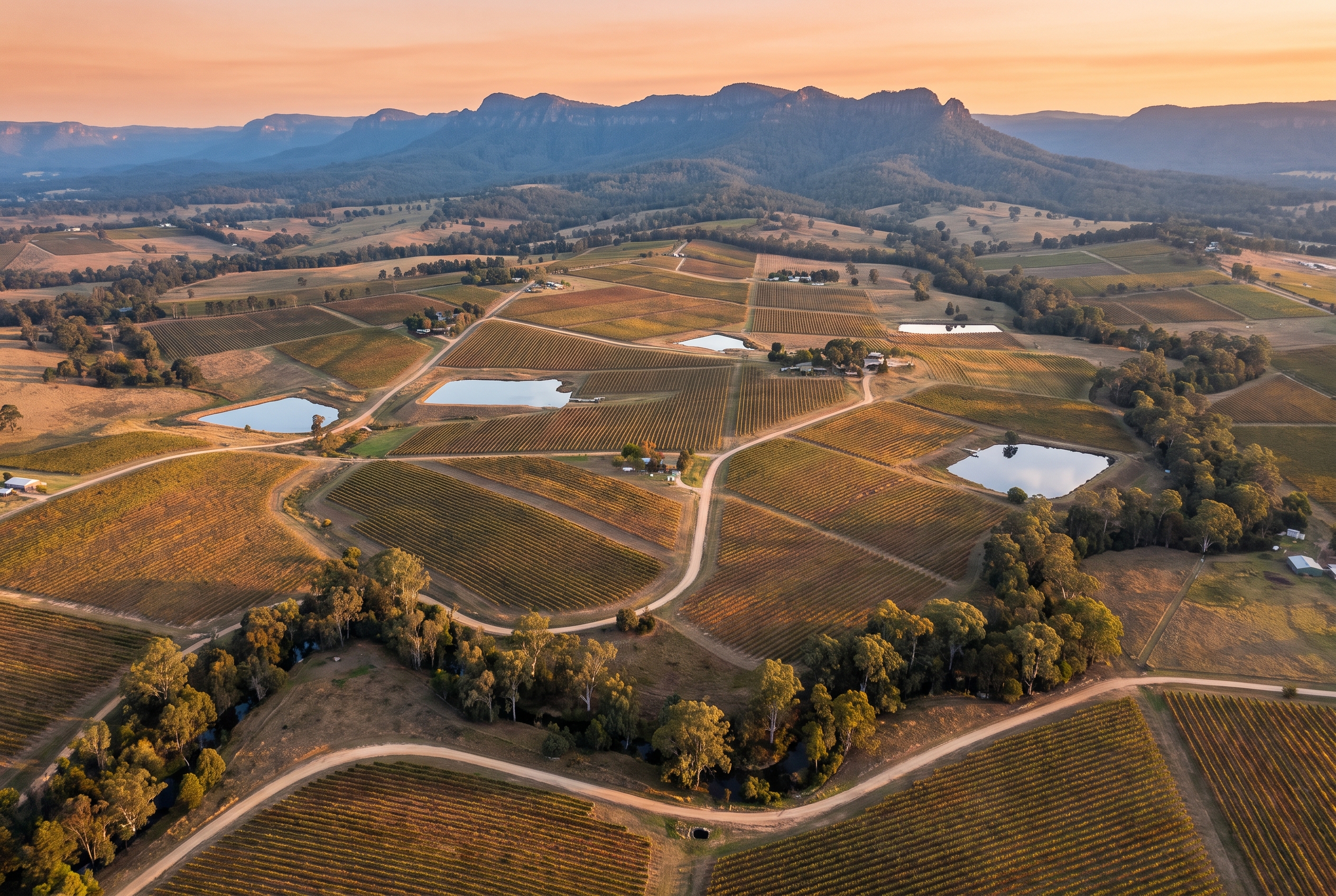
The Hunter Valley isn't just a pretty landscape with vines on it; it's a mature, high-yield tourism economy with a structural advantage almost no other Australian wine region enjoys: proximity. The region sits roughly two hours' drive north of Sydney, which puts Australia's largest and wealthiest metro population, more than five million people, inside comfortable weekend range. No flight, no overnight travel, no planning friction. A Sydney couple can decide on Thursday to spend the weekend among the vines and be tasting semillon by Saturday lunch. That impulse-accessible geography is the engine underneath every other number in this section.
The numbers themselves are substantial. The region draws roughly 1.4 million overnight visitors a year, making it the most visited wine region in the country, and its wine-tourism economy is worth around $557 million annually. Those visitors move through more than 150 cellar doors, a dense constellation of hatted restaurants, championship golf courses, day spas, concert amphitheatres and wedding venues. The Hunter is also Australia's oldest wine region, with commercial viticulture dating to the 1820s, which gives the brand a heritage depth newer regions market hard but can't manufacture.
What matters commercially isn't the size of the market but its make-up. Wine-region visitors skew decisively toward the guests a premium operator wants: higher household income, higher per-trip spend, and travel occasions, anniversaries, milestone birthdays, weddings, corporate retreats, that carry real emotional weight and are therefore far less price-sensitive. Someone booking a six-bedroom estate for a fortieth birthday isn't shopping the way a business traveller shops a highway motel. They're buying an occasion, and occasions carry margin.
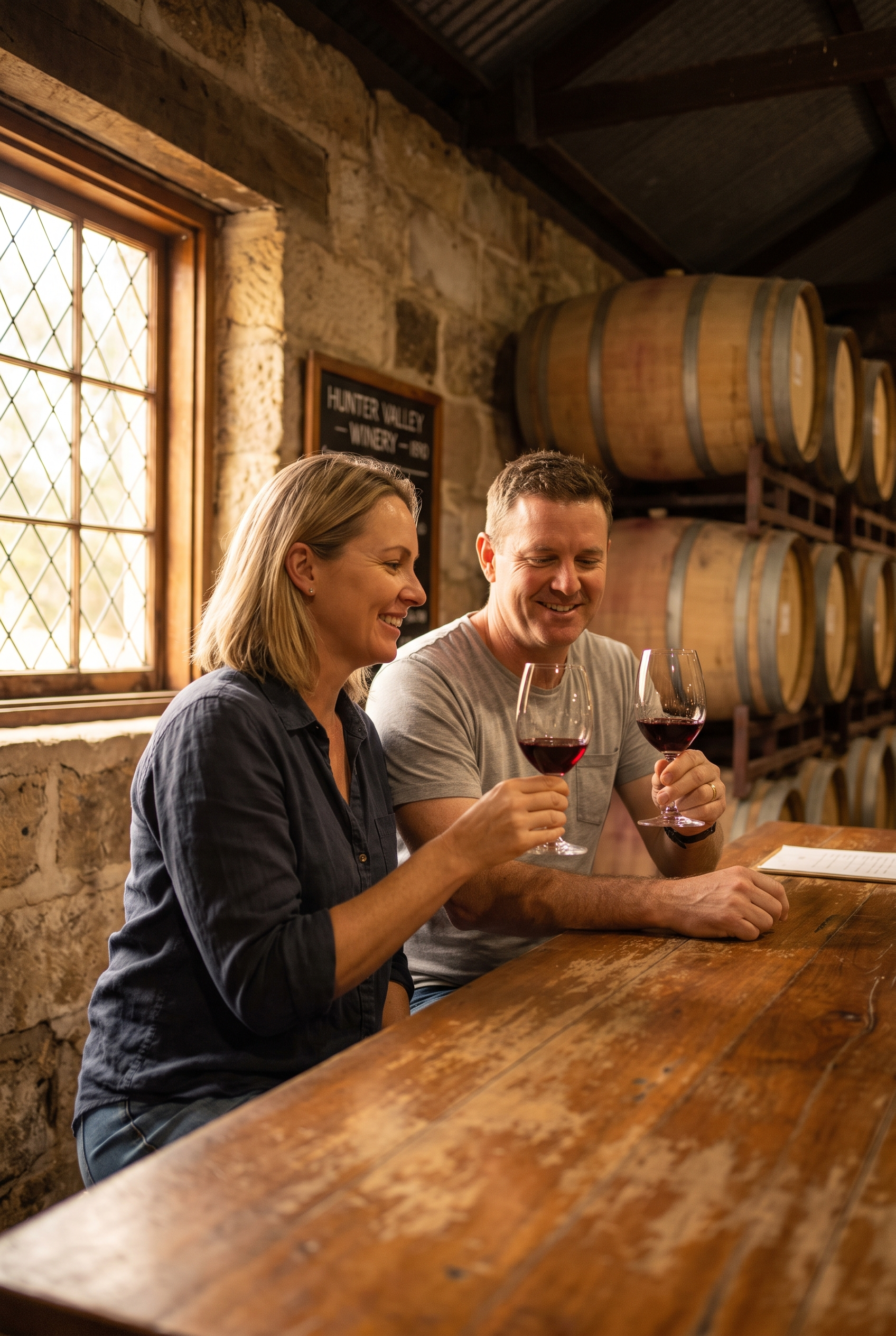
Treating "Hunter Valley demand" as a single market is the mistake that produces generic marketing. In reality the region hosts at least three distinct demand systems, each with its own booking window, price behaviour and seasonality, and our program addresses each on its own terms.
The leisure weekend economy is the volume engine: couples and small groups from Sydney and Newcastle, booking two to six weeks out, concentrated Friday to Sunday, peaking through summer and the event calendar. It's the most price-visible segment and the one where brand search and remarketing do the heaviest lifting. Its structural quirk is the midweek trough: the same property that commands a premium on Saturday can sit empty on Tuesday, which is why smart operators build midweek products, wine-and-dine packages, longer-stay value, remote-work escapes, rather than discounting the weekend.
The celebration economy, weddings above all, runs on a completely different clock. Hunter Valley weddings get booked twelve to twenty-four months ahead, with venue and accommodation chosen together, and every wedding pulls an entourage: a bridal-party house, guest overflow across several properties, pre- and post-event stays. October and March are the ceremonial peaks. The implication is easy to state and easy to miss: marketing aimed at weddings has to run now to fill calendars eighteen months out. Pause it in a quiet month and you're quietly emptying a year you can't see yet.
The corporate economy, retreats, executive off-sites, team events, books on a quarterly planning cycle, values capacity, privacy and turnkey service over headline price, and is reached through entirely different channels: LinkedIn, direct outreach, search terms like "corporate retreat NSW" that leisure operators never think to contest. It's the segment where a large-estate collection has its most defensible edge, because a hotel can offer a conference room but not a private twelve-bed estate with its own grounds.
Layered across all three is the event calendar. The Hunter's amphitheatres stage major touring acts through summer, and event weekends behave like miniature peak seasons: minimum-night stays, surcharges, compressed availability. Your own listing terms already reflect this rhythm, which is exactly the kind of sophistication the market rewards. The curve below shows the composite effect: a demand system that never fully sleeps but breathes hard, with a winter trough that represents not dead months but the cheapest customer-acquisition window of the year, when the price of attention collapses while a genuine cohort, the cosy-fireplace, red-wine-weather crowd, keeps travelling.
Pattern composite: seasonal visitation research, event calendar and observed regional minimum-stay behaviour · indicative shape, not absolute volume
Indexed search-interest pattern consistent with Google Trends seasonality for Hunter Valley accommodation terms · indicative shape
Two patterns shape the plan. The seasonal curve tells us when to lean in and when to buy reach cheaply, our budget follows it month by month rather than spending flat. The shift toward AI-assisted search tells us where to plant a flag now: a fast-growing slice of trip planning already begins with a question to an assistant rather than a search box, and almost no operator in the Hunter is structured to be the name it returns.
Getting ahead of both is the whole thesis, spend with the season, and build the AI-search presence while the field is still empty.
Hunter accommodation supply stratifies into three tiers that chase the same wallet while offering fundamentally different products. At the top of the awareness curve sit the branded resorts: Chateau Elan at The Vintage, the Spicers properties, Voco Kirkton Park, Oaks Cypress Lakes, Rydges. They bring brand recognition, loyalty programs, conference infrastructure and marketing budgets, and they anchor the region's premium price perception. What they can't offer is the thing the celebration and group economies most want: a whole private house. Twelve friends celebrating a milestone don't want twelve hotel rooms and a shared lobby; they want a kitchen, a pool, a long table and no strangers.
At the bottom sits the platform long tail: hundreds of individually hosted properties on Airbnb and Stayz, wildly variable in quality, service and reliability. This tier competes on price and quantity, wins enormous discovery share through the platforms' own gravity, and steadily erodes trust with inconsistent experiences, which is precisely the opening a professionally managed collection exists to fill.
Between them sits the tier that matters for this proposal: professionally managed boutique collections. This is where Hunter Valley Stays lives, alongside Unwind Hunter Valley, The Vintage Holiday Houses and a handful of smaller operators. The product logic is compelling, whole-house privacy with hotel-grade reliability, curated quality without the anonymity of the platforms, and observed nightly rates across the region run from roughly $95 at the budget fringe to $2,200+ for premium estates, with the managed-boutique tier sitting in the upper half of that range almost by definition.
Our position within the tier is distinctive on product and full of opportunity on distribution. On product: a deliberately curated collection, every property personally inspected, a signature setup standard, and a genuine services layer that the "quality over quantity" positioning describes accurately. On distribution: we're not yet listed on the major travel platforms, which means every listing we create is net-new reach rather than a cost to claw back. Section 02 looks at what each player does with the exposure they have, and Section 04 turns our distribution position into the centrepiece of the plan: latent reach we can switch on deliberately, on our terms, with the conversion machinery ready to turn platform discovery into direct, repeat relationships.

Everything above converges on a single strategic surface: the search results page, in its three modern forms. The first is classical Google search, where queries like "Hunter Valley accommodation," "Pokolbin luxury stay" and hundreds of long-tail variants are contested by the platforms' enormous SEO machines, the resorts' brand weight, and the sharper boutique operators' content. The second is the platforms themselves, which work less as booking engines than as the region's de facto discovery layer; a large share of guests begin a trip by browsing Airbnb or Booking.com the way an earlier generation browsed a brochure rack. Being absent from them means being absent from that browse, which is exactly the reach we get to switch on.
The third, and fastest-moving, is AI-mediated search. A growing share of trip planning now starts as a conversation, "where should we stay in the Hunter for a group of ten?", answered not with ten blue links but with a handful of named recommendations synthesised from whatever the AI systems can read and trust. Getting named in that answer is earned through structured data, consistent signals, third-party corroboration and machine-readable content, disciplines almost no accommodation operator anywhere, let alone in the Hunter, has begun to practise. This is the widest open field in this document, and it gets an entire vertical of its own.
The Hunter's visitors are already coming. The whole game is being where they look, and that's exactly the ground we're about to claim.
We went through each player directly, positioning, portfolio, pricing, distribution and digital execution, in July 2026. Each gets a screenshot, a scorecard and a SWOT, read from where we sit.
 Primary Direct Competitor
The most strategically advanced operator in our tier, and the one whose playbook most resembles the strategy this proposal recommends, which is exactly why it earns our attention. Unwind leads its whole brand with "Book Direct & Save Up to 20%," turning the commission argument into a consumer discount and training guests to bypass the very platforms it uses for discovery. Its collection is larger and broader than ours, stretching to properties sleeping up to 34 guests, which lets it capture the large-group and multi-family segment. It publishes location-structured content (Pokolbin, Lovedale, the gateway villages) that wins long-tail local SEO, and, most tellingly, it runs an explicit owner-acquisition funnel, competing not just for guests but for the property inventory that is our own growth ceiling too.

Take away: Unwind is running the right strategy with an average brand. Our counter isn't to out-shout them, it's to out-class them: premium positioning, better storytelling, and the AI-search and platform-conversion machinery they haven't touched yet.
 Direct Competitor · Niche
A focused operator built around a single geographic asset: The Vintage golf estate and its surrounds. The niche is genuinely defensible, golf-weekend groups, fairway-view stays, an affluent repeat clientele attached to the course itself, and the named-property branding ("10AK · One of a Kind," "Dashaz Dream") shows a real instinct for character marketing. But the concentration cuts both ways: the brand means little beyond golf-adjacent demand, its discovery footprint is thin outside its own name, and it meets us only at the edges of the group and celebration segments. Worth noting, we already manage a property on the same estate, Hollyford House sits on The Vintage, so we can contest this niche without conceding our broader positioning.

Take away: A niche worth respecting, not fearing. We hold property on the same estate and can capture golf demand as one segment among six rather than betting the brand on it.
 Direct Competitor
An operator whose positioning rests almost entirely on the anti-commission argument: book with the owner or a dedicated manager, skip the platform fees, get personal local knowledge. It's essentially the book-direct thesis with the marketing spend removed. The message is sound and it resonates with a slice of travellers, but the execution is modest, a smaller, less curated collection than ours or Unwind's, limited brand production, and little sign of systematic search, content or paid acquisition. It's useful intelligence, though: it proves the direct-booking message has native pull in this region, and it shows what that message achieves without professional machinery behind it, which is exactly the difference we bring.

Take away: Proof the message works, and a reminder about under-investment. The premium book-direct narrative here is still unclaimed; the first operator to own it professionally owns it for years.
The branded resorts aren't direct competitors for the whole-house product, but they compete hard for the guest's weekend and, more importantly, for the search results page. Their international brand systems bring loyalty databases, corporate travel agreements, spa and golf infrastructure, and budgets no boutique operator matches head-on. They dominate generic "Hunter Valley luxury" queries and set the region's premium price ceiling, observed from roughly $147 midweek to well beyond $500 in peak, which usefully legitimises the rates a premium estate collection charges. Their blind spots are just as clear: no privacy at scale, no way to host a wedding party across a private estate, and a corporate product that's a conference room, not a retreat. We win here not by comparison but by reframing the category: a hotel is where you sleep near the Hunter; a private estate is how you actually inhabit it.
Screenshot omitted · composite of multiple international brands
Chateau Elan · Spicers Vineyards Estate · Voco Kirkton Park · Oaks Cypress Lakes · Rydges. A composite of the branded resorts, no single site to picture.
Take away: Concede the generic head terms, take the occasions. Every wedding party, group celebration and private retreat is a booking the resorts structurally can't serve, and the search terms describing those occasions are far cheaper than the ones the resorts defend.
The Subject · Honest Self-Assessment
Assessed with the same lens we applied to everyone else. The strengths are real and rare: the only awarded operator in the tier, a genuinely curated collection with a signature standard, deep family roots in the region, thirty produced property films most operators would envy, and the whole-house premium product the market's most valuable occasions demand. The areas of opportunity are just as real and, importantly, all of them are execution gaps rather than product gaps: a platform whose technical constraints limit search performance, room to establish presence on the discovery layer, AI-search readiness to build, and operational workflows (manual property publishing among them) that we can streamline to free up capacity for the growth ahead. Every opportunity here has a matching workstream further down, that's the design of this proposal, not a coincidence.

Take away: A premium product with room to grow its visibility is the best position in marketing, because visibility is buildable. The reverse never is.
The same seven dimensions, scored one to ten for every player, so the shape of the opportunity is visible at a glance.
| Player | Paid Advertising | Website Quality | Maps SEO | General SEO | AI-SEO | Social Media | Brand & Content | Overall |
|---|---|---|---|---|---|---|---|---|
| Hunter Valley Stays | 3 | 5 | 5 | 5 | 2 | 6 | 8 | 4.9 |
| Unwind Hunter Valley | 6 | 6 | 7 | 8 | 2 | 6 | 5 | 5.7 |
| The Vintage Holiday Houses | 3 | 6 | 5 | 4 | 1 | 4 | 6 | 4.1 |
| Hunter Valley Holiday Homes | 2 | 4 | 4 | 3 | 1 | 3 | 3 | 2.9 |
| The Resort Tier | 8 | 8 | 8 | 8 | 3 | 7 | 8 | 7.1 |
Scores are Inventiva's assessment from direct examination of each player's live digital presence, July 2026. They describe current visible footprint, not business quality or guest satisfaction, areas where Hunter Valley Stays already leads the tier.
Every fact above sorts into one of three buckets, and the plan that follows assigns every workstream to one of them.
What follows turns this into the program: requirements, the plan across every channel, roadmap, deliverables, SLAs, KPIs and budget.
Before the how, the what. These are the outcomes this whole program is built to deliver, and everything that follows ladders up to one of them.
Drive more demand straight to the website, and as we expand onto new discovery channels for reach, turn those guests into direct, repeat relationships we own.
Strong, consistent visibility across Google, the new discovery channels we open up, and the AI answer engines, so the search more and more often ends with us.
Smooth the midweek and winter troughs with the right offers reaching the right segments at the right moment in the season.
Build a steady owner-acquisition pipeline so the collection keeps growing with quality properties, the real ceiling on long-term growth.
A fast, modern website and booking experience that converts the traffic we send it and frees the team from manual work.
Always know which dollar produced which booking, with reporting in plain English and a partner accountable for the numbers.
Each of these earns its place on its own, but the real returns come from how they feed each other, search feeds AI, reviews feed both, platforms feed brand searches, and every booking makes the next one cheaper.
Own the searches that already happen
Every month, thousands of people type some version of “Hunter Valley accommodation” into Google. Most of them never see us. SEO is how we change that, and it's the highest-return channel we have because the traffic is free once earned and compounds over time.
A fast, clean, crawlable site with structured data on every property, so Google can read exactly what each listing is, sleeps, costs and offers, and show it richly in results.
Dedicated pages for Pokolbin, Lovedale and the gateway villages, plus a regional guide layer that makes us the authority Google trusts on the whole Hunter.
Google Business Profile optimised and fed, so we appear in the map pack when someone searches nearby, the single highest-intent moment in travel.
Get named when the AI recommends
A fast-growing share of trip planning now starts with a question to ChatGPT, Gemini or Perplexity, and the answer names a few properties rather than listing ten links. Almost nobody in the Hunter is structured to be one of those names. This is the widest open field in the whole plan.
Structured data, clean entity signals and consistent details across every place we appear, so the AI systems resolve us into one confident, citable recommendation.
Reviews, mentions and listings that give the answer engines independent reasons to trust and recommend us, the signals they lean on most.
Machine-readable property and availability data so that when AI agents begin booking on travellers' behalf, and they will, we're the operator they can actually transact with.
Buy the guests we can't yet earn
SEO compounds but takes time; paid media buys us qualified guests now, and funds itself through bookings while the organic engine builds. Structured well, with tracking wired to booking value, it's the fastest lever we have.
Capture high-intent searches and our own brand terms, the cheapest, highest-converting traffic there is, before anyone else intercepts them.
Accommodation is a considered purchase; we stay in front of the guest who browsed but didn't book, at a fraction of cold-traffic cost.
Budget follows the demand curve, leaning into cheap winter reach and defending peak, so every dollar buys the most guests it can.
Turn thirty films into a booking engine
You already have thirty produced property films and a beautiful product, most of the hard content work is done. Social's job here isn't likes; it's building the audiences paid retargets, proving the experience at the moment guests decide, and claiming two channels nobody in the region has bothered with.
The visual shop window and the social proof a guest checks the night before booking, kept active, beautiful and on-brand.
X and LinkedIn reach corporate-retreat budgets and property owners with almost no competition in this region, attention that's nearly free because nobody else is bidding for it.
A Facebook group and content that we own outright, reach no algorithm change can take away, growing with every local business and guest that joins.
List everywhere, convert direct
We're not on the platforms yet, which means every listing we create is net-new exposure rather than a cost to recover. We enter deliberately, present impeccably, and use the billboard effect, discover on the platform, book direct with us, to make the first commissioned booking the last.
Best-in-class presence on Airbnb, Booking.com, Stayz, Agoda and more, consistent, polished, and optimised rather than left on defaults.
Platform discovery drives brand searches; we make sure the guest who finds us there completes the booking with us, commission-free, and comes back direct.
Matching details everywhere feed the same entity confidence that powers SEO and AI recommendations, one system, many surfaces.
A website that sells while you sleep
Marketing multiplies whatever platform it lands on. Speed, structured data, deep-linked booking journeys and automated publishing don't just improve the site, they make every marketing dollar in every other vertical work harder. This is the foundation the rest stands on.
A fast, modern, reliable site, because page speed feeds Google's Quality Score and directly lowers the cost of every ad we run.
Streamlined property publishing so new listings go live and start earning visibility immediately, freeing your team from manual workflows.
A 24/7 assistant that answers guest questions and guides bookings even at midnight, covered in detail in the next section.
Quick wins first, so you see movement in weeks; the compounding engine built underneath, so it keeps growing for years.
Kickoff, access, analytics and tracking wired up, the technical speed and health fixes that make every later dollar cheaper, and the first platform listings drafted. We want momentum the client can see inside the first month.
Search foundations, structured data and the AI-readiness layer go live; platform listings publish and get optimised; social channels launch with the daily-posting bonus period; review automation switches on.
Paid media launches across search and social once tracking has data to optimise against; content engine and regional authority build begins; the booking chatbot goes live; owner-acquisition funnel opens.
Everything shifts from build to optimise: bidding tuned to booking value, content compounding, AI-search presence measured and expanded, and quarterly strategic reviews steering spend toward what the data proves works.
Approximate start and end for each element of the build. Timings anchor to project kickoff and flex a little with scope, but the sequence, quick technical wins first, compounding channels layered on, holds.
Indicative schedule · anchors to kickoff · ongoing bars continue for the term of engagement
Guests research late at night, on their phones, across time zones. A smart booking assistant answers the moment they ask, and turns curiosity into a booking while your team rests.
No missed enquiry, no waiting until morning, the moment a guest asks, they get a helpful answer.
It matches guests to the right property by size, features and dates, then guides them toward booking direct.
It gently reinforces the book-direct message on every conversation, protecting margin and the guest relationship.
It handles the repetitive questions so your people spend their time on the guests and moments that need a human touch.
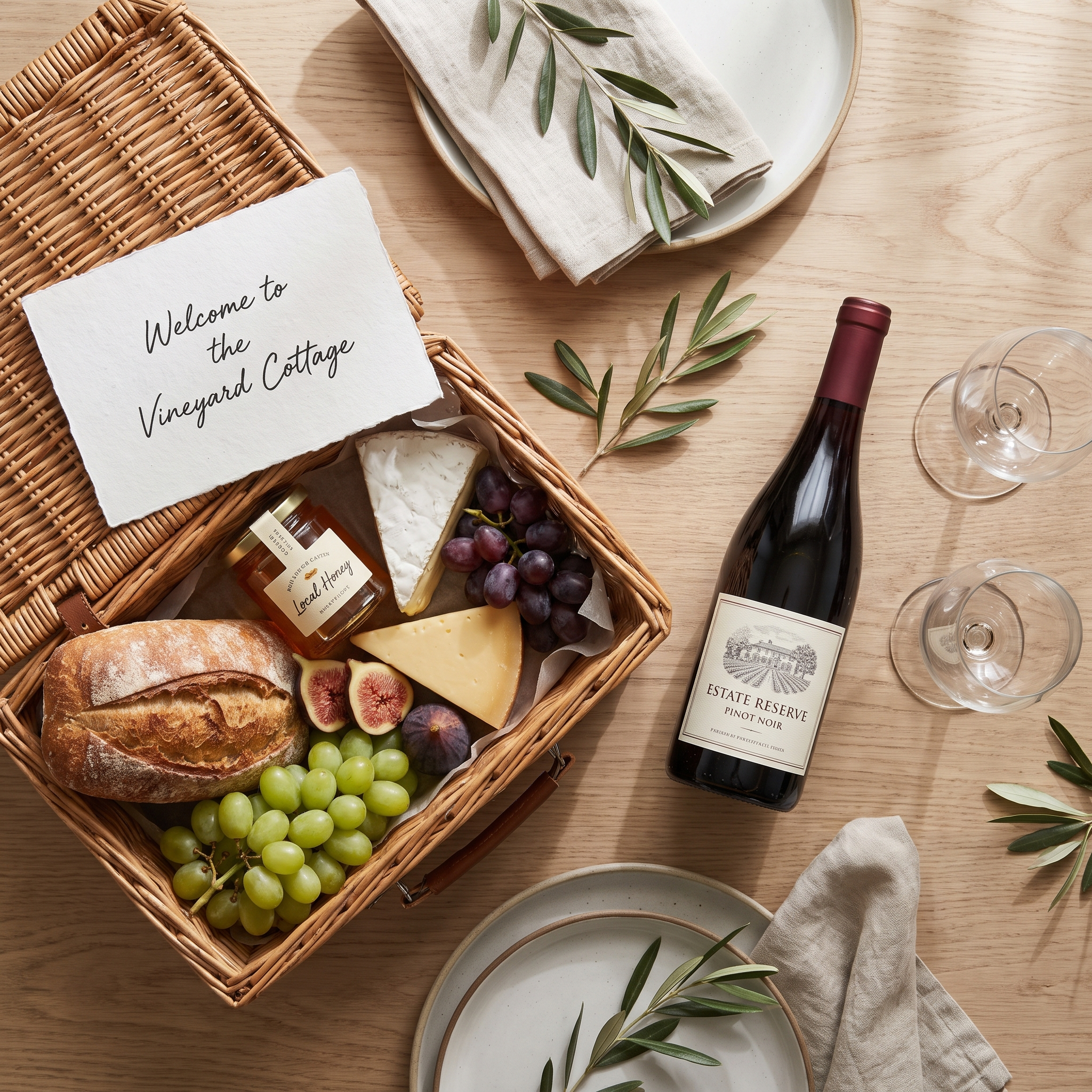
huntervalleystays Every stay begins with a little welcome. Local produce, a bottle from just down the road, and the keys to your weekend. #HunterValley #BookDirect
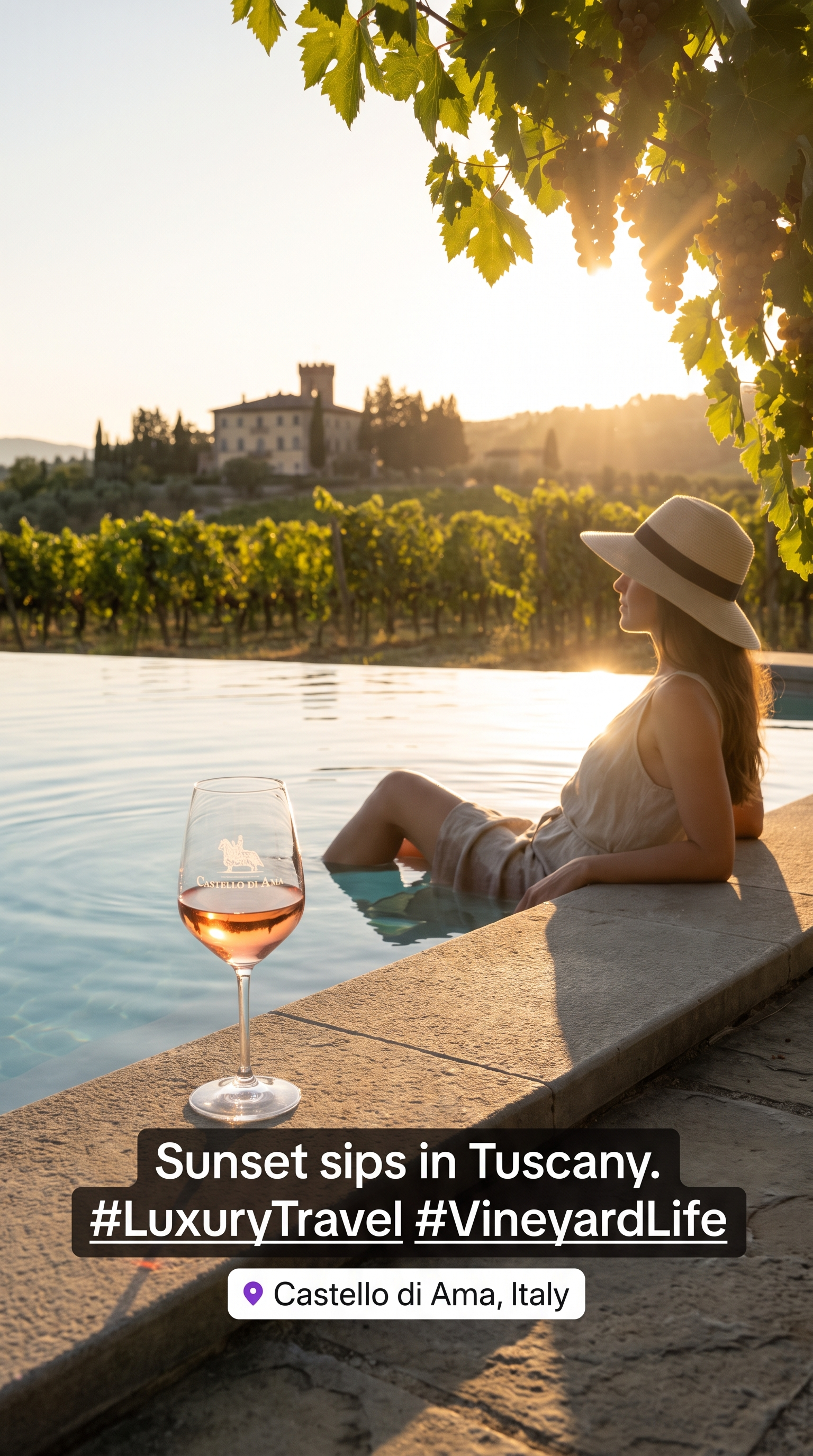
huntervalleystays Golden hour, your pool, your people. Book the whole estate direct and save. #GroupGetaway
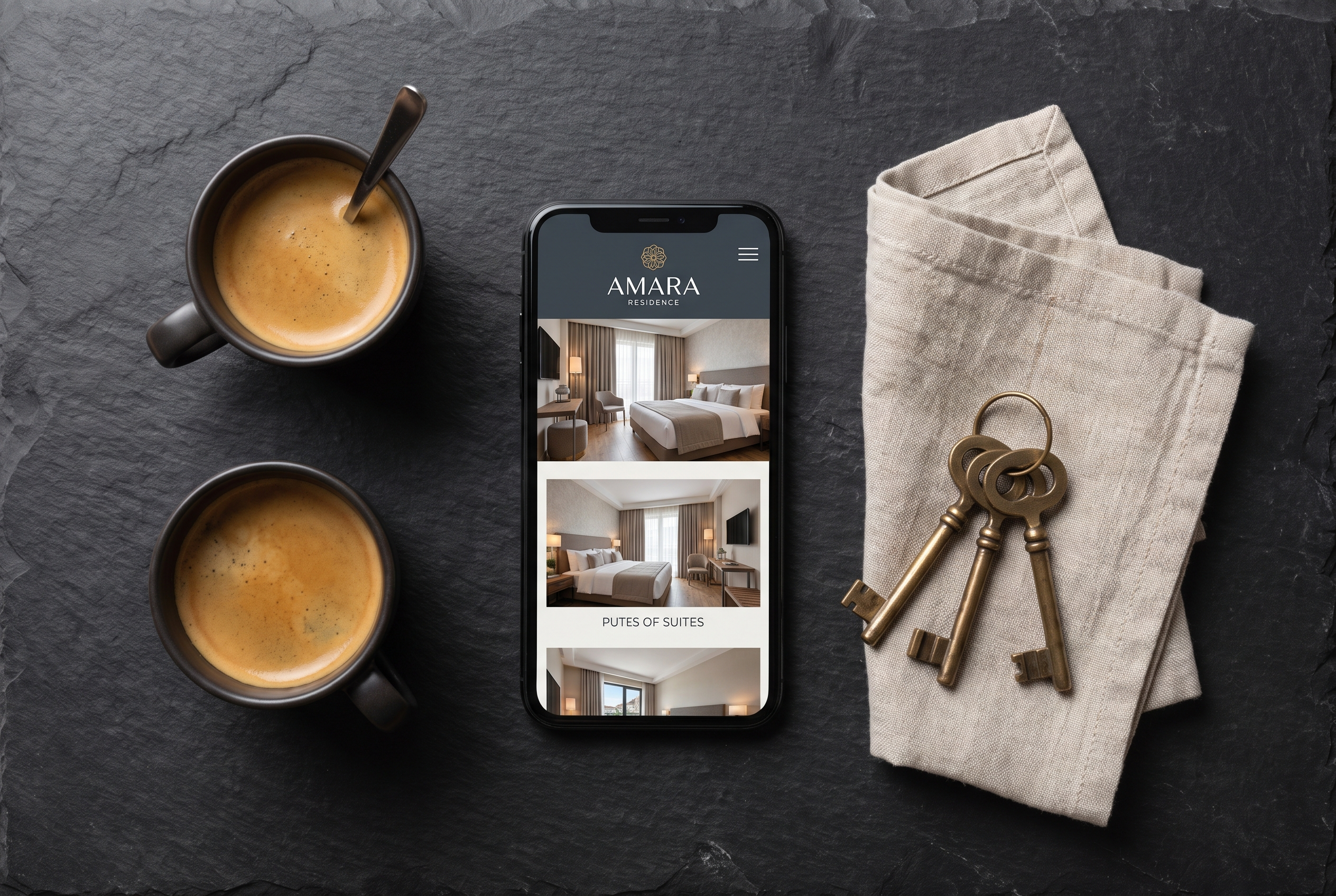
Hunter Valley Stays Planning a team offsite that people actually remember? A private estate in Wine Country, two hours from Sydney. #CorporateRetreat

huntervalleystays Turn a milestone into a weekend nobody forgets. Whole-estate celebrations, catered to the last candle. #CelebrateInTheVines

huntervalleystays Winter in the Valley is criminally underrated. Fireplace, a Hunter red, and nowhere to be. #WinterEscape #BookDirect
Illustrative concepts · imagery generated to show direction, captions indicative
A clear picture of what lands each month, the service standards we commit to, and the numbers we'll both watch.
A plain-English report tying spend to bookings, plus a working session on what's next.
Technical fixes, new pages, structured data and regional authority content on a rolling schedule.
Build, optimisation and bid management across search and social, with spend paced to season.
Scheduled posting across channels, community management support, and the property-film content engine.
Listings created, optimised and kept consistent across the travel platforms.
Speed, structured data, booking journeys, chatbot and automation, delivered per the roadmap.
| Deliverable | What it includes | Frequency |
|---|---|---|
| Performance report & strategic review | Spend-to-bookings report in plain English, plus a working session on priorities | Monthly · by the 5th |
| Search rankings & visibility report | Movement across target keywords, locations and the map pack | Monthly |
| AI-search share-of-voice check | How often, and how accurately, the answer engines name us | Monthly |
| Paid campaign management | Build, bid management and optimisation across search & social | Ongoing · weekly touch |
| SEO & on-page content | Technical fixes, new location pages, structured data, regional authority content | Ongoing · rolling schedule |
| Social media posting | Scheduled posts across channels, drawn from the property-film library | Ongoing · per agreed cadence |
| Community management support | Monitoring and response guidance across social channels | Ongoing · business days |
| Channel listing management | Listings created, optimised and kept consistent across discovery platforms | Ongoing · monthly audit |
| Review generation & monitoring | Automated post-stay review requests and reputation tracking | Ongoing · automated |
| Platform & development work | Speed, structured data, booking journeys, chatbot, automation | Per roadmap · scoped |
| Analytics & tracking upkeep | Booking-value tracking kept accurate as campaigns change | Ongoing |
| Quarterly strategic review | Deeper reset of priorities against the numbers and the season ahead | Quarterly |
We reply to any request from your team within one business day, usually much faster.
Your performance report and review land in the first week of every month, without fail.
Anything affecting live spend or bookings, a broken link, a paused campaign, is triaged same-day.
A deeper session every quarter to reset priorities against the numbers and the season ahead.
The number that matters most, bookings made with you, commission-free.
Rankings and impressions across our target searches and locations.
How often, and how accurately, the AI engines name us for key prompts.
Booking value generated for every dollar of media, tracked live.
Growth in reviews and average score across Google and beyond.
Visits and enquiries arriving from AI assistants and platform listings.
One management fee for the work, plus an ad-spend level you choose and can change any time. Ad spend goes straight to the platforms, we never mark it up.
For testing the waters and proving the model on the highest-intent searches first.
Our recommended starting point, enough budget to work several segments at once and generate real momentum.
For pushing hard into peak season, weddings and the group segment, and scaling what's working.
Covers strategy, campaign management, SEO, social, listing management and reporting, everything in the plan except ad spend and any development scoped separately in the roadmap. Confirmed together at kickoff so it matches the scope you choose.
Ad spend billed separately · paid direct to platforms · no markup
This brings every channel, search, AI, paid, social, platforms and the website itself, into one coordinated system with a single team accountable for it. No hand-offs between a marketing agency and separate developers, because we're both. Everything is measured against bookings, not vanity metrics.
The monthly management fee covers strategy, campaign management, SEO, social, reporting and the platform work scoped in the roadmap. Ad spend is separate and goes directly to the platforms with no markup, you only ever pay the media cost. Any development beyond the agreed scope is quoted transparently before we start.
Paid media and the platform quick wins can move within the first month or two. SEO and AI-search compound over three to six months and keep growing from there. The roadmap is deliberately sequenced so you see momentum early while the longer-term engine builds underneath it.
Not at all, and that's the point. We list on them to capture the exposure they provide, then use the billboard effect and a better direct offer to convert those guests into direct, repeat relationships over time. The platforms become a discovery channel, not a toll you pay forever.
The core mechanics, structured data, entity consistency, review corroboration, are how these systems demonstrably work today. Some of the newest tactics are first-mover bets that cost little to implement alongside the rest, and we measure AI referrals so you see the channel emerge in your own numbers rather than taking our word for it.
You do, entirely. Every account, listing, piece of content and line of code we build is yours. There's no lock-in beyond the initial term, our aim is to earn the relationship every month, not trap it.
You've built a genuinely special collection in one of the best regions in the country. The only thing missing is making sure every guest searching for exactly that experience finds you first, and books direct. That's the work. We'd love to do it together.
Let's talk next steps →Inventiva Creative Studio · david.v@inventiva.global · inventiva.global
You've built a genuinely special collection in one of the best regions in the country. The only thing missing is making sure every guest searching for exactly that experience finds you first, and books direct. That's the work. We'd love to do it together.
Let's talk next steps →Inventiva Creative Studio · david.v@inventiva.global · inventiva.global
What your feed could look like.
A quick taste, using the kind of content the property films and a considered social plan would produce. On-brand, aspirational, and built to make a guest stop scrolling.